In George’s Words · Music & Creativity
It Matters to Whom It Matters
On AI, creative freedom and the human feeling behind an idea.
“It matters to whom it matters!”
— Boy George
What makes a creative process meaningful? In the interview shared here, Boy George talks about using AI, following an idea and making We Will Dance Again. His account opens up a conversation about the tools we use, the choices we make and the feelings we want to express.
Update ·
A new series, and perhaps a book
Replying to Diana, who asked whether the interview would appear in a magazine, George explained that it is part of his new series, Conversation With Myself, based on questions he has been asked.
“I might do a book”
— Boy George, in his reply on X
He also welcomed questions, adding, “If you have any”. A book is a possibility he is considering; this reply does not announce a confirmed release.
In the replies, fellow fan Diana welcomed the idea of a book and said she would enjoy reading George’s conversations with himself.
Have a question you would love to ask George? You can join the conversation on his original X post.
From George’s reply dated 25 October 2026, shown in the screenshot shared with CYV. Notes left on this page are part of our fan conversation and are not sent to George.
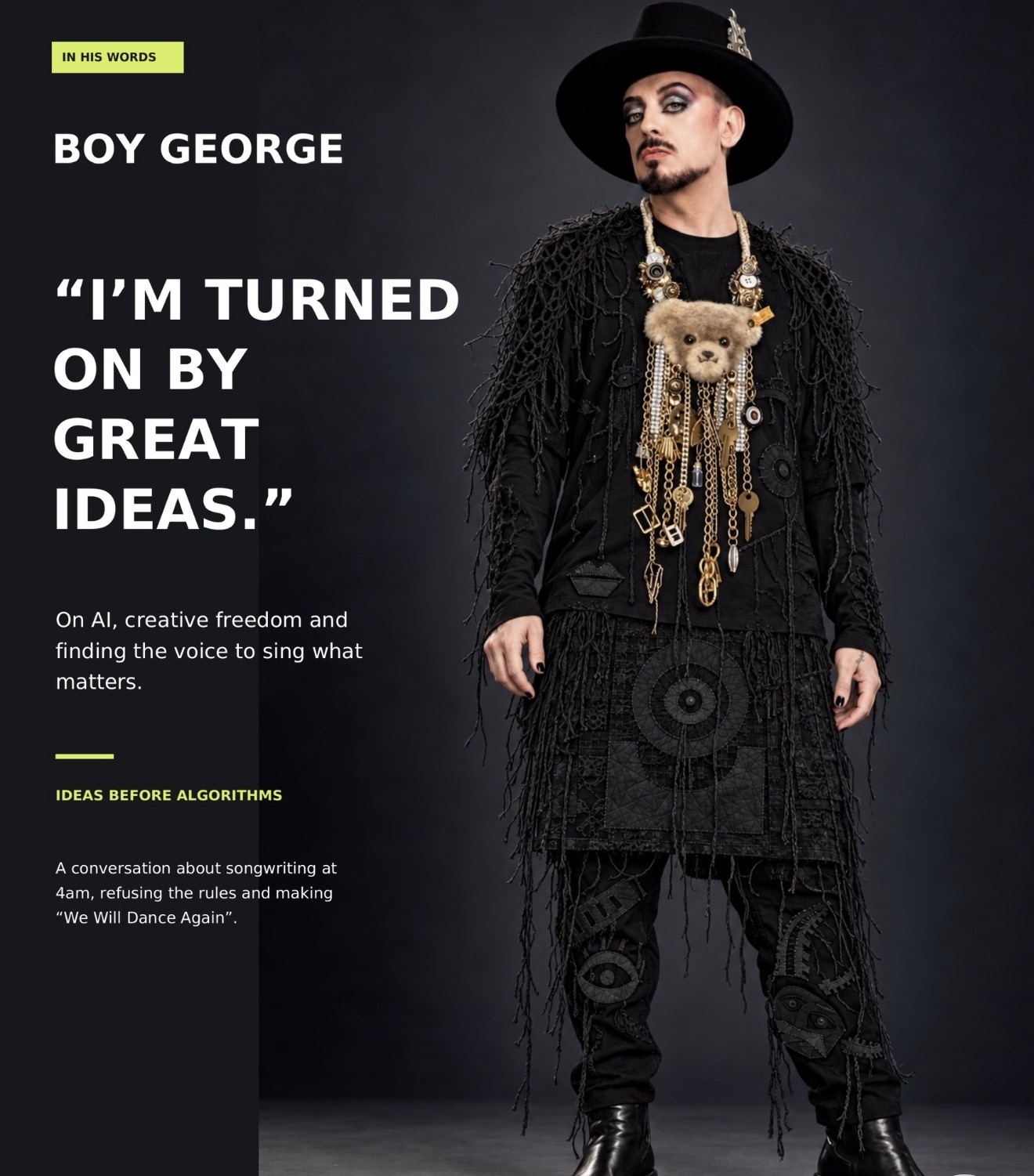
Following the feeling
George describes ideas arriving in bursts—sometimes at four in the morning. He values being able to explore them immediately, without waiting for another musician to be available or having to defend a feeling before the song exists.
He also recalls the frustration of being told that something was “too gay.” For him, the freedom to follow his own expression is part of what makes this way of working valuable.
When discussing We Will Dance Again, he describes worrying about a high passage in the AI-assisted version. On the day he recorded it himself, he says the notes came, and he burst into tears. His account connects the technology to a deeply personal act of performance.
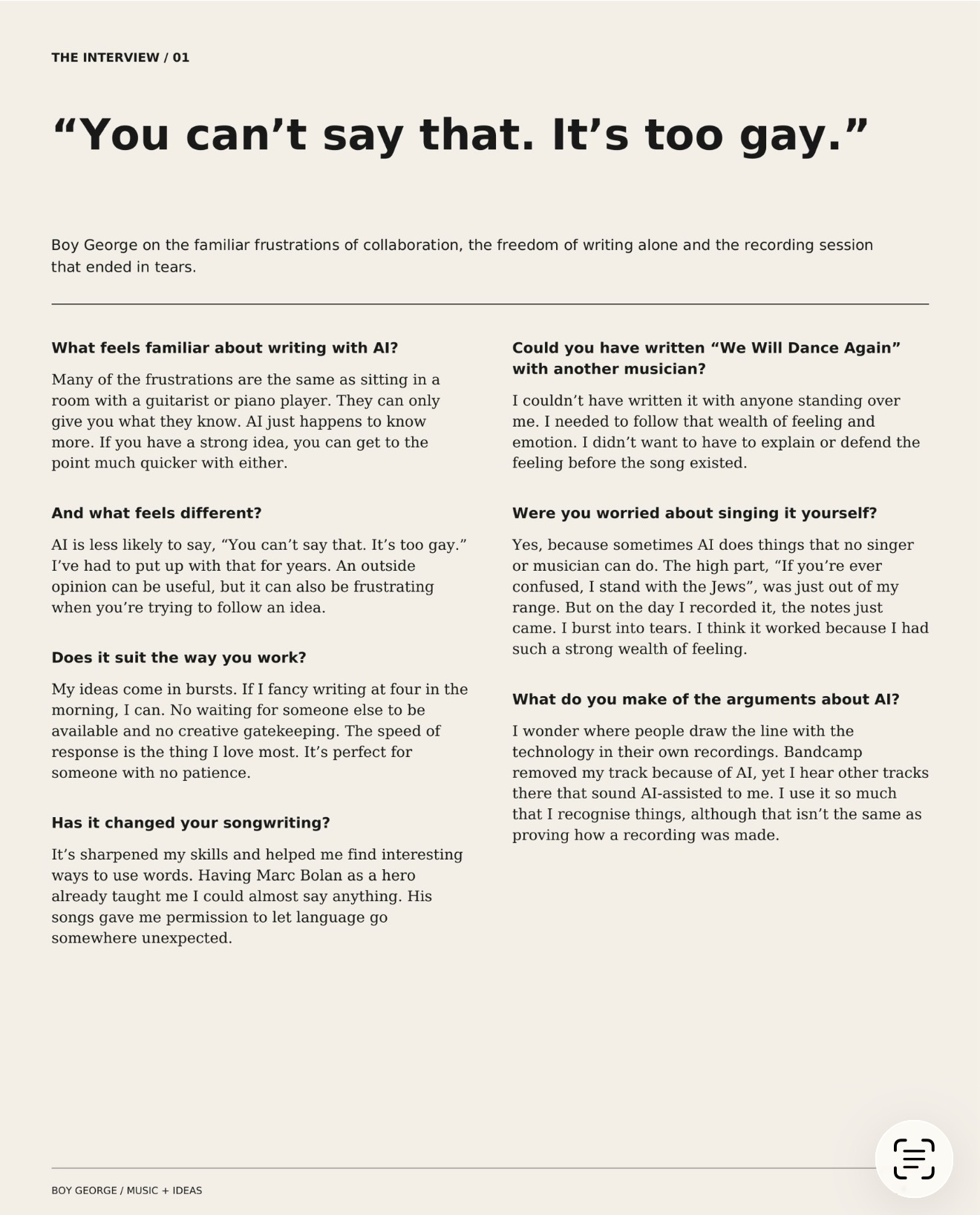
Read the interview as text
Transcribed from the supplied interview image. Questions and answers below are from that image; the surrounding reflections are CYV commentary.
What feels familiar about writing with AI?
Many of the frustrations are the same as sitting in a room with a guitarist or piano player. They can only give you what they know. AI just happens to know more. If you have a strong idea, you can get to the point much quicker with either.
And what feels different?
AI is less likely to say, “You can’t say that. It’s too gay.” I’ve had to put up with that for years. An outside opinion can be useful, but it can also be frustrating when you’re trying to follow an idea.
Does it suit the way you work?
My ideas come in bursts. If I fancy writing at four in the morning, I can. No waiting for someone else to be available and no creative gatekeeping. The speed of response is the thing I love most. It’s perfect for someone with no patience.
Has it changed your songwriting?
It’s sharpened my skills and helped me find interesting ways to use words. Having Marc Bolan as a hero already taught me I could almost say anything. His songs gave me permission to let language go somewhere unexpected.
Could you have written “We Will Dance Again” with another musician?
I couldn’t have written it with anyone standing over me. I needed to follow that wealth of feeling and emotion. I didn’t want to have to explain or defend the feeling before the song existed.
Were you worried about singing it yourself?
Yes, because sometimes AI does things that no singer or musician can do. The high part, “If you’re ever confused, I stand with the Jews”, was just out of my range. But on the day I recorded it, the notes just came. I burst into tears. I think it worked because I had such a strong wealth of feeling.
What do you make of the arguments about AI?
I wonder where people draw the line with the technology in their own recordings. Bandcamp removed my track because of AI, yet I hear other tracks there that sound AI-assisted to me. I use it so much that I recognise things, although that isn’t the same as proving how a recording was made.
A reader’s perspective · Summary
Questions about originality
In a reply, Bri Stevenson describes AI as an “amalgam”—a mixture or blend. Her comments about AI raise questions about where generated material comes from, how it relates to existing creative work and whether it might reproduce someone else’s work.
She emphasises the importance of human inspiration, while also mentioning that she uses Grok for images. Her response makes room for both an appreciation of the tool and concerns about its use.
This is a summary of the AI-related points in Bri Stevenson’s reply, as shown in a screenshot supplied to CYV. Her full response also expresses a personal religious view of inspiration. This summary is not a direct quotation or a technical or legal assessment.
A reflection from CYV
The human contribution
What stands out to me is that George’s account already puts his own feelings and ideas at the centre. He describes needing freedom to follow an emotion, working when inspiration strikes, and singing the song himself. He presents AI as helping him develop that expression.
Her point about valuing human inspiration doesn’t necessarily contradict his process; her reply doesn’t fully engage with the human contribution he’s describing. The questions she raises about originality can sit alongside a closer look at the choices, emotion and performance he brings.
These perspectives invite us to consider both what a tool makes possible and how thoughtfully we use it.
My perspective · Rachel Glover
Room to explore
This resonates with how I use AI as a tool. I bring my ideas, curiosity and perspective, and it helps me explore beyond what I already know. I can question what it offers, reshape it, and decide what feels right for what I want to express.
That process matters to me. I also think there’s room to value its possibilities and ask thoughtful questions about how it works. We can share different experiences and still listen to each other.
— Rachel 💜
Source: Boy George’s original X post and the supplied interview images. Reader response summarised from a supplied screenshot. CYV reflections are fan commentary and are not statements by Boy George.